




 필자닷컴 야간상담 오픈
 13년연속 소비자만족 1위

 내게 맞는 어학원 찾기
 리얼 학교 방문기
 주말에 내가 쓸 비용은?
 최고가성비 이벤트 즐기기
 현지에서도 필자닷컴!
 현지에서 가능한









 필자 특급 혜택! 컨시어지 서비스







-
순위제목조회수
-
 모알 보알 밴 렌트하기~ 리조트 예약까지
 89,576
 -
 [필리핀 세부] 카모테스 여행 100배 즐기기 49,445
 -
 마닐라 시내 - 리잘 공원정보. (사진 16장 포함) 30,831
 -
 세부의 지역정보15,552
 -
 마닐라 근교 - 따가이따이 여행 정보14,377
 -
 [필리핀 세부/막탄] 호텔 숙박 요금 및 정보13,345
 -
 보라카이의 모든 모습을 볼수 있는 사진첩.13,160
 -
 마닐라 근교 - 팍상한 폭포 여행정보12,853
 -
 [세부-배선착장] 선박회사 전화번호에요~12,478
 -
 마닐라 지역(에르미타 -말라테)의 지도/한국 음식점/쇼핑몰12,137


- 이름 : tutors
- 작성일 : 2013-01-22
- 조회수 : 15914
- 추천수 : 0
Iligan City, Philippines
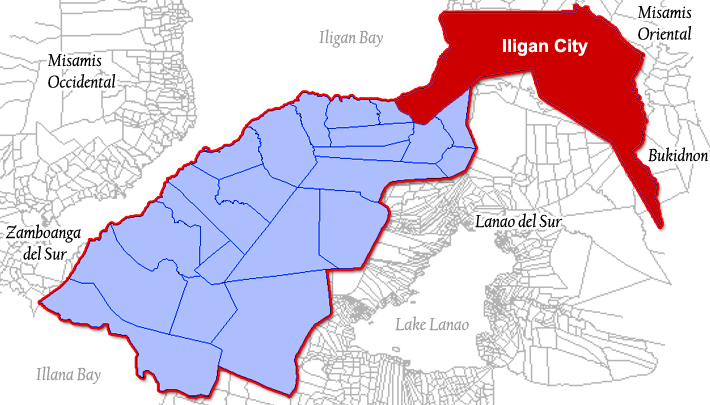
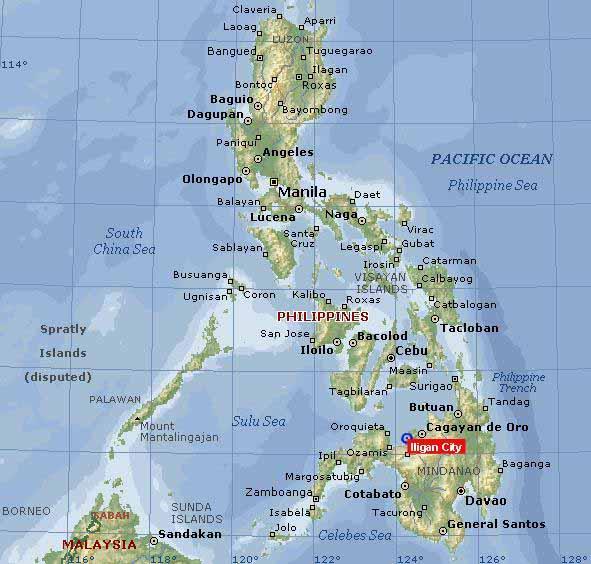
The City of Iligan (Cebuano: Dakbayan sa Iligan; Tagalog: Lungsod ng Iligan) is a highly urbanized industrial city north of the province of Lanao del Norte, Philippines, and the province's former capital. It is approximately 795 kilometers southeast of Manila. According to the 2010 census, it has a population of 322,821 people.
History
Iligan City had its beginnings in the village of Bayug, four (4) kilometers north of the present Poblacion. It was the earliest pre-Spanish settlement of native sea dwellers. The monotony of indigenous life in the territory was broken when in the later part of the 16th century, the inhabitants were subdued by the Visayan migrants from the island kingdom of Panglao. In the accounts of Jesuit historian Francisco Combes, the Mollucan King of Ternate invaded Panglao. This caused Panglaons to flee in large numbers to Dapitan, Zamboanga del Norte. In Dapitan, the surviving Prince of Panglao Pagbuaya, received Legazpi's expedition in 1565. Later, Pagbuaya's son Manook was baptized Pedro Manuel Manook. The Christianized Manook subdued the Higaunon village in Bayug and established it as one of the earliest Christian settlements in the country. The settlement survived other raids from other enemies, and, because of their faith in God and in their patron saint, Saint Michael the Archangel, the early Iliganons moved their settlement from Bayug to Iligan. The name Iligan is from the Higaonon word iligan or ilijan' meaning "fortress of defense" against frequent attacks by pirates and other hostile Mindanao tribes.
A stone fort called Fort St. Francis Xavier was built in 1642 where Iliganons sought refuge during raids by bandits. But again, the fort sank due to floods. Another fort was built and this was named Fort Victoria or Cota de Iligan. In 1850, because of floods, Don Remigio Cabili, then Iligan's governadorcillo, built another fort and moved the poblacion of the old Iligan located at the mouth of Tubod River west of the old market to its present site. Iligan was already a town of the once undivided Misamis Province in 1832. However, it did not have an independent religious administration because it was part of Cagayan de Oro, the provincial capital. It was one of the biggest municipalities of Misamis Province. In 1903, the Moro Province was created. Iligan, because of its Moro residents was taken away from the Misamis Province. Then Iligan became the capital of the Lanao District and seat of the government where the American officials lived and held office. Later in 1907 the capital of the Lanao District was transferred to Dansalan.
The Spaniards abandoned Iligan in 1899, paving the way for the landing of the American forces in 1900. In 1914, under the restructuring of Moroland after the end of the Moro Province (1903–1913), Iligan became a municipality composed of eight barrios together with the municipal district of Mandulog. After enjoying peace and prosperity for about 40 years, Iligan was invaded by Japanese forces in 1942. The liberation in Iligan by the Philippine Commonwealth forces attacked by the Japanese held sway in the city until 1944 to 1945 when the war ended. On November 15, 1944, the city held a Commonwealth Day parade to celebrate the end of Japanese atrocities and occupation.
Using the same territorial definition as a municipality, Iligan became a chartered city of Lanao del Norte on June 16, 1950. It was declared a first class city in 1969 and was reclassified as First Class City "A" on July 1, 1977 by virtue of Presidential Decree No. 465. In 1983, Iligan was again reclassified as a highly urbanized city.
Geography
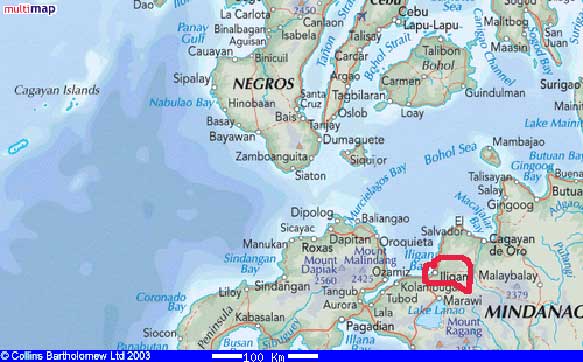
Iligan City is bounded on the north by the 3 municipalities of Misamis Oriental (namely Lugait, Manticao and Opol), to the south by the 3 municipalities of Lanao del Norte (Baloi, Linamon and Tagoloan) and the 2 municipalities of Lanao del Sur (Kapai and Tagoloan II), to the northeast by Cagayan de Oro City, to the east by the municipality of Talakag, Bukidnon; and to the west by Iligan Bay. This is also the 2nd largest city in Northern Mindanao next to Malaybalay City, capital of Bukidnon.
Known as the City of Majestic Waterfalls, there are around 23 waterfalls in and around Iligan. Among them is the Maria Cristina Falls, home of Mindanao's primary hydroelectric power station, and Limunsudan Falls.
Iligan is also the Industrial Center of the South. It produces hydroelectric power for the Mindanao region through the National Power Corporation (NAPOCOR), the site of the Mindanao Regional Center (MRC) housing Agus IV, VI and VII hydroelectric plants. It also houses industries like steel, tinplate, cement and flourmills. The National Steel Corporation, one of the largest steel manufacturers in the Southeast Asian region, now Global Steelworks International Incorporated was re-opened in 2003 after heavy setbacks resulting to its closure in 1999. Iligan along with its neighboring city, Cagayan de Oro City, are the two major components for the Cagayan de Oro-Iligan Corridor, the fastest developing area in Northern Mindanao.
To the west, Iligan Bay provides ferry and container ship transportation. East of the city, flat cultivated coastal land gives way to steep volcanic hills and mountains providing the waterfalls and cold springs for which the area is well known.
People and culture
Iligan is predominantly Christian (93.61%), with Catholics constitutes the majority of the Christians. Saint Michael is the Patron saint of the city, and the city fiesta in devotion to the saint is held every September 29. Iliganons compose of the Cebuano speaking locals and the minority that compose of the Maranao, Tagalog and some other cultural minorities and immigrants from other places. It is not only rich in natural resources and industries but it is also the home of a mix of cultures, Maranaos of Lanao del Sur, Higaonons of Bukidnon, and many settlers and migrants from other parts of the country. It is known for its diverse culture.
Cebuano is the major language in the city (about 93%). The rest speak Tagalog, Maranao, Hiligaynon, Ilocano, Chavacano, and Waray-Waray. The majority of the population can speak and understand English and Spanish.
Tourism
Iligan is also known as City of Majestic Waterfalls because of its numerous waterfalls that are located within its area of jurisdiction. There are about 23 waterfalls in the city. The most famous as well as the city's major landmark, is the Maria Cristina Falls. It is also the primary source of electric power of the city, harnessed by Agus VI Hydroelectric Plant. The Tinago Falls, accessible through a 300-step staircase, is located in Barangay Ditucalan. Other famous waterfalls in the city are, Mimbalut Falls, Abaga Falls, Dodiongan Falls, and Timoga Springs.


- ·
- ·
- ·
- ·
- ·ryWvMVxeet
- ·ryWvMVxeet
- ·ryWvMVxeet\'\"\\(
- ·ryWvMVxeet�럥\'\"\\(
- ·ryWvMVxeet
- ·ryWvMVxeet
- ·ryWvMVxeet
- ·ryWvMVxeet
- ·ryWvMVxeet
- ·ryWvMVxeet
- ·ryWvMVxeet

















-
서울센터 :서울 강남구 테헤란로27길 8, 10층 (역삼동, 엠타워)02-3482-0542
-
청주센터 :충북 청주시 상당구 사직대로 350번길 11-2, 3층(서문동)043-221-0543
-
부산센터 :부산광역시 부산진구 중앙대로 721-1, 5층(부전동)051-808-0515
-
창원센터 :경남 창원시 성산구 단정로 9, 12층 (상남동, 토토스빌딩)055-282-9345


-
사이트 접속자 통계
-
오늘60어제476
-
한달33,515누적12,509,595
-
일일최고94,672회원수20,299